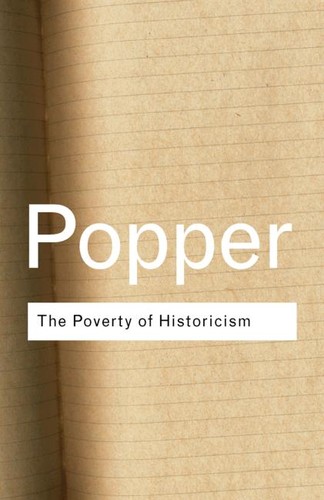
The Poverty of Historicism
Karl Popper
Summary (Spoiler-Free)
In 'The Poverty of Historicism,' Karl Popper critiques the deterministic view of history that suggests events are preordained by historical forces. He argues against the idea that understanding the past can lead to accurate predictions about the future, promoting instead a philosophy that emphasizes the unpredictability of human actions and the open-ended nature of societal development. Through rigorous analysis, Popper defends the importance of rational thought and critical inquiry in confronting historical narratives. This work is a thought-provoking exploration of the limitations of historicism and the implications for social sciences and philosophy.
Who Should Read This
If you are intrigued by the complexities of historical interpretation and enjoy delving into philosophical debates, this book will resonate with you. Its critical approach encourages readers to question conventional wisdom about the past and its influence on the future.
Frequently Asked Questions
Is 'The Poverty of Historicism' part of a series, and how does it fit into the reading order of Karl Popper's works?+
'The Poverty of Historicism' is a standalone work and does not belong to any series. However, it is an important part of Karl Popper's philosophical canon and can be read independently. Those familiar with Popper's other works, such as 'The Logic of Scientific Discovery' or 'Conjectures and Refutations,' may find this book to be a valuable complement, as it reflects his critical stance on the nature of scientific inquiry and historical analysis. Readers can approach it without prior knowledge of his other writings, although familiarity with his philosophical principles may enhance the understanding of his arguments.
What is the target audience for 'The Poverty of Historicism,' and are there any content notes I should be aware of?+
This book is primarily aimed at readers interested in philosophy, particularly those engaged in the study of epistemology, history, and social sciences. It is suitable for students, scholars, and enthusiasts who appreciate critical thinking and intellectual discourse. While the content is academic in nature, it remains accessible to a general audience with an interest in philosophical inquiry. There are no explicit content warnings, but readers should be prepared for complex arguments and a rigorous examination of historical theories, which may challenge conventional perspectives.
Are there any adaptations or different formats available for 'The Poverty of Historicism'?+
Currently, 'The Poverty of Historicism' is available in print and digital formats, making it easy to access for a range of readers. Additionally, there may be audiobook versions available through various platforms, allowing those who prefer auditory learning to engage with Popper's ideas. However, there are no major film adaptations of this work, as it is primarily a philosophical text rather than a narrative-driven story. Readers looking for alternative formats can check popular online retailers or audiobook services for availability.
What sets 'The Poverty of Historicism' apart from other philosophical works in the same genre?+
'The Poverty of Historicism' stands out due to its focused critique of historicism, which is often overlooked in favor of more broad philosophical discussions. Popper's insistence on the unpredictability of human behavior challenges deterministic views that dominate historical narratives. This unique perspective encourages a more dynamic understanding of societal change and progress. Furthermore, Popper's writing style is characterized by clarity and precision, making complex ideas more accessible, which is a notable feature for readers in philosophical literature.
What kind of reader is likely to enjoy 'The Poverty of Historicism'?+
Readers who have a keen interest in philosophy, particularly in the realms of history and science, will find 'The Poverty of Historicism' rewarding. Those who enjoy engaging with challenging ideas and appreciate critical analysis will resonate with Popper's arguments. Additionally, individuals who are skeptical of deterministic explanations and seek to explore alternative views on societal development will find this book particularly compelling. Academic scholars and students in philosophy or social sciences may also benefit from its insights and foundational critiques.
Similar Books You'll Love

0.0(0 ratings)
Rate this book:
Book at a Glance
~2 hr 57 min to read
- Pages
- 166
- First published
- 1956
- Original language
- EN