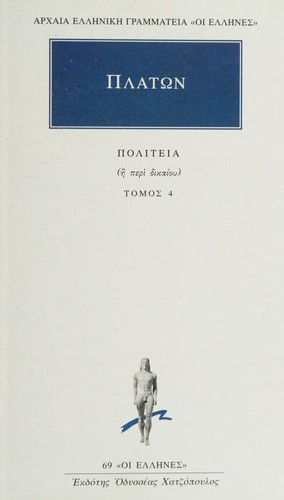
πολιτεία
Plato
Summary (Spoiler-Free)
In 'πολιτεία', commonly known as 'The Republic', Plato explores the nature of justice and the ideal state through a series of dialogues led by Socrates. The work delves into topics such as the role of the philosopher-king, the structure of society, and the pursuit of the good life. As Socratic discussions unfold, readers are invited to examine their own beliefs and values regarding morality, governance, and human nature. This foundational text remains a critical examination of political theory and ethical philosophy.
Who Should Read This
If you enjoy deep philosophical discussions and are curious about the foundations of Western thought, 'πολιτεία' will resonate with you. This book challenges readers to reflect on their own understanding of justice and the ideal society, making it a thought-provoking experience.
Frequently Asked Questions
What is the recommended reading order for Plato's works?+
Although 'πολιτεία' stands alone as a comprehensive exploration of justice and governance, it is often beneficial to read it alongside other dialogues by Plato for a fuller understanding of his philosophy. Starting with dialogues like 'Apology' and 'Crito' can provide context for Socratic ideas, which are central to 'πολιτεία'. Readers may also find value in exploring Plato's later works, as they demonstrate the evolution of his thoughts. However, newcomers can confidently begin with 'πολιτεία' without prior knowledge of Plato's other writings.
Is 'πολιτεία' appropriate for all audiences?+
'πολιτεία' is suitable for readers with an interest in philosophy, ethics, and political theory. While the text is accessible, its themes and concepts may resonate more with those who have some background in these subjects. The dialogues engage with complex ideas that may require contemplation, making it a rewarding read for mature audiences, including students, academics, and general readers seeking to challenge their thinking. However, those unfamiliar with philosophical discourse might find some sections demanding, but this can also serve as an opportunity for growth.
Are there any adaptations of 'πολιτεία' available?+
'πολιτεία' has been the subject of numerous interpretations and adaptations over the years. While there are no direct film adaptations, many documentaries and educational programs explore its themes and historical significance. Additionally, there are various audio versions and translations available, which can enhance the reading experience by providing different interpretations of Plato's text. These adaptations often aim to make the philosophical discussions more accessible and engaging for contemporary audiences.
What distinguishes 'πολιτεία' within the philosophy genre?+
'πολιτεία' is distinguished by its methodical approach to discussing justice, politics, and the role of the individual within society. Unlike many philosophical works that focus solely on abstract concepts, Plato uses dialogue as a tool to engage readers in a dynamic exploration of ideas. The text's structure allows for a multifaceted examination of the ideal state and the moral responsibilities of its citizens, setting it apart from other philosophical treatises. Its lasting impact on Western philosophy and political thought underscores its significance and relevance.
What type of reader is likely to enjoy 'πολιτεία'?+
Readers who are intellectually curious and enjoy grappling with fundamental questions about morality, governance, and human nature are likely to find 'πολιτεία' engaging. Those who appreciate philosophical dialogues and discussions that challenge conventional thinking will resonate with the text's approach. Additionally, individuals interested in the intersections of philosophy, politics, and ethics will appreciate how Plato constructs his arguments and explores the complexities of societal structures, making it a compelling read for both philosophy enthusiasts and general readers alike.
Similar Books You'll Love

0.0(0 ratings)
Rate this book:
Book at a Glance
~6 hr 31 min to read
- Pages
- 368
- First published
- 1554
- Original language
- PT