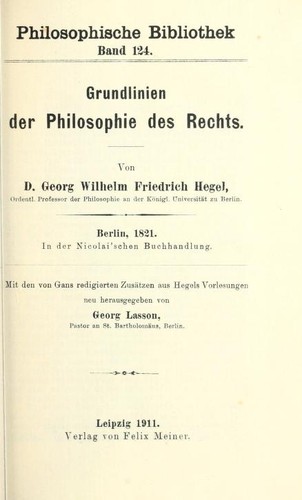
Grundlinien der Philosophie des Rechts
Georg Wilhelm Friedrich Hegel, Alan White
Summary (Spoiler-Free)
In 'Grundlinien der Philosophie des Rechts,' Georg Wilhelm Friedrich Hegel presents a foundational exploration of legal and ethical philosophy, examining the relationship between freedom and the state. This work intricately weaves together concepts of morality, social order, and the development of human consciousness, making it essential reading for those interested in the philosophical underpinnings of law. Hegel's dense yet rewarding prose invites readers to engage critically with the nature of justice and the role of individual rights within societal frameworks.
Who Should Read This
If you find yourself captivated by the complexities of moral philosophy and the intricate dance between individual freedom and state authority, this book might resonate deeply with you. Hegel's profound insights challenge conventional thinking and are best appreciated by those eager to delve into philosophical discourse.
Frequently Asked Questions
How does this book fit into the broader context of philosophical literature?+
As a standalone work, 'Grundlinien der Philosophie des Rechts' holds a significant place in the canon of Western philosophy, particularly within the realm of legal and ethical thought. Hegel’s ideas have influenced numerous philosophical movements, including existentialism and Marxism. This text serves as a bridge between classical philosophy and modern political theory, exploring themes of freedom, morality, and the state. Readers will find that Hegel's intricate arguments not only reflect the historical context of his time but also engage with timeless questions that continue to resonate in contemporary discussions around law and ethics.
Who is the intended audience for this book, and what content should readers be aware of?+
'Grundlinien der Philosophie des Rechts' is primarily aimed at readers with a keen interest in philosophy, particularly those studying political philosophy, ethics, or legal theory. The text is dense and requires careful reading, as Hegel's writing style can be complex and abstract. Readers should be prepared for challenging concepts and a robust engagement with philosophical arguments. While the book addresses significant moral and social issues, it does so in a way that is respectful and thoughtful rather than sensational. This makes it suitable for academic audiences and philosophy enthusiasts alike.
Is this book available in different formats or adaptations?+
Yes, 'Grundlinien der Philosophie des Rechts' is available in several formats, including print editions and digital versions for e-readers. Additionally, audiobooks of this work may also be available for those who prefer auditory learning. While there are no direct film adaptations, the themes explored in Hegel's philosophy often find their way into various forms of media and academic discourse, influencing works that engage with themes of justice, morality, and societal structures.
What distinguishes this book within the philosophy genre?+
'Grundlinien der Philosophie des Rechts' stands out in the philosophy genre due to its rigorous examination of the interplay between individual rights and the collective good. Hegel’s dialectical method and his exploration of the evolution of societal norms provide a unique perspective that challenges readers to think critically about the nature of justice and ethical governance. Unlike many philosophical works that focus on abstract theory, Hegel's text is deeply rooted in practical implications, making it a vital resource for understanding the philosophical foundations of law and society. This distinctive approach contributes to its lasting relevance in philosophical discussions.
What type of readers might enjoy this book the most?+
Readers who are drawn to deep, analytical discussions about the nature of law, ethics, and the role of the state will find 'Grundlinien der Philosophie des Rechts' particularly engaging. Those who appreciate a philosophical style that challenges conventional thinking and invites rigorous debate will likely resonate with Hegel's thought-provoking insights. This work is ideal for students of philosophy, law, and political science, as well as anyone passionate about understanding the complexities of human society and governance from a philosophical standpoint.
Similar Books You'll Love

0.0(0 ratings)
Rate this book:
Book at a Glance
~5 hr 9 min to read
- Pages
- 290
- First published
- 1821
- Original language
- EN