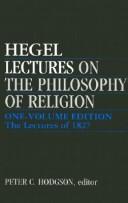
Vorlesungen über die Philosophie der Religion
Georg Wilhelm Friedrich Hegel
Summary (Spoiler-Free)
In 'Vorlesungen über die Philosophie der Religion', Georg Wilhelm Friedrich Hegel presents a profound exploration of religious thought through the lens of philosophy. This work delves into the nature of divine reality, the development of religious consciousness, and the interplay between faith and reason. Hegel's lectures invite readers to engage with complex ideas about the essence of religion and its place within the broader context of human experience.
Who Should Read This
If you have a keen interest in the intersection of philosophy and theology, this book offers a rich tapestry of ideas that will resonate with you. It's particularly suited for those who appreciate deep, analytical discussions that challenge conventional understandings of spirituality.
Frequently Asked Questions
Is this book part of a series, and how should I approach reading it?+
'Vorlesungen über die Philosophie der Religion' is a standalone work by Hegel, so readers can dive into it without needing to read other texts first. However, familiarity with Hegel's other philosophical writings may enhance your understanding of his arguments. It is advisable to approach this text with patience, as Hegel's style is dense and can be challenging; taking notes or discussing concepts with others can greatly benefit comprehension.
What audience is this book appropriate for, and are there any content notes?+
This book is primarily aimed at readers with a serious interest in philosophy, particularly those studying or engaged in theological discussions. It assumes a certain level of familiarity with philosophical terminology and concepts. There are no explicit content warnings, but readers should be prepared for abstract discussions that may touch on complex and sometimes controversial ideas related to religion and metaphysics.
In what formats is this book available, and is there any adaptation like an audiobook or film?+
Currently, 'Vorlesungen über die Philosophie der Religion' is available in print and various digital formats, including eBook editions. While there are no direct film adaptations of this work, some of Hegel's philosophical ideas have been referenced or discussed in academic lectures and documentaries. Audiobook versions may exist, but they might not capture the full depth of Hegel's complex arguments as effectively as a printed text.
What distinguishes this book from other philosophical works on religion?+
'Vorlesungen über die Philosophie der Religion' stands out due to Hegel's unique dialectical method, which emphasizes the development of ideas over time. Unlike many philosophical texts that present static views of religion, Hegel's work examines the evolution of religious consciousness and its synthesis with rational thought. His approach invites readers to consider the dynamic relationship between faith, reason, and the unfolding of human history, offering a comprehensive understanding that is both intellectually stimulating and challenging.
What kind of reader is likely to enjoy this book the most?+
Readers who are drawn to dense philosophical texts and enjoy engaging with abstract concepts will likely find this book to their liking. Those with an academic background in philosophy or theology may appreciate Hegel's intricate arguments and historical context. Additionally, individuals who are curious about the philosophical underpinnings of religious beliefs and their implications for human existence will find a wealth of thought-provoking material in this work.
Similar Books You'll Love

0.0(0 ratings)
Rate this book:
Book at a Glance
~19 hr 30 min to read
- Pages
- 1100
- First published
- 1840
- Original language
- EN