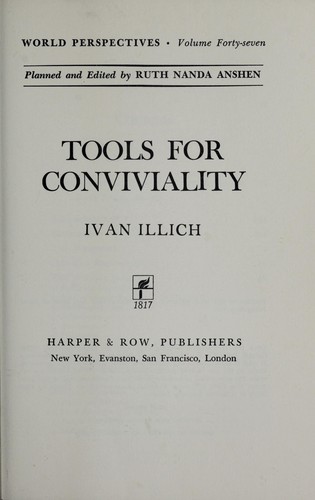
Tools for Conviviality
Ivan Illich
Summary (Spoiler-Free)
In 'Tools for Conviviality', Ivan Illich presents a thought-provoking exploration of the relationship between technology and human interaction. He critiques the ways in which modern tools can both empower and alienate individuals, advocating for a more thoughtful and community-oriented approach to the tools we use. Through a blend of philosophy and social critique, Illich invites readers to reconsider the impact of technological advancements on society and personal well-being, emphasizing the importance of conviviality in our daily lives.
Who Should Read This
If you have a keen interest in philosophy and the implications of technology on social structures, this book is likely to resonate with you. It's particularly engaging for readers who appreciate critical reflections on modern life and seek a deeper understanding of how our tools shape our interactions.
Frequently Asked Questions
Is 'Tools for Conviviality' part of a series, and how does it fit within Illich's body of work?+
This book is a standalone work by Ivan Illich, published in 1973. It is part of Illich's broader exploration of society, technology, and education, which includes several other influential texts. While not part of a series, it complements his other writings by delving into the philosophical underpinnings of how tools and technology can foster or hinder human connection. Readers familiar with Illich's critiques of institutionalized systems will find familiar themes, though 'Tools for Conviviality' distinctly focuses on the role of technology in everyday life.
What is the target audience for 'Tools for Conviviality' in terms of age and interests?+
This book appeals primarily to adult readers, particularly those with an interest in philosophy, sociology, and the critical examination of technology. It's suitable for university students, academics, and anyone engaged in discussions about the social implications of modern tools. Readers looking for a deep dive into philosophical concepts and their practical applications in daily life will find value in Illich's insights, making it a stimulating read for those who enjoy intellectual challenges.
Are there any content notes or themes that readers should be aware of before delving into this book?+
Readers should be prepared for a critical examination of technology and its societal impact, which may challenge conventional views. Illich discusses themes of alienation and the importance of community, which could provoke reflection on personal beliefs regarding modern life. While the book does not contain graphic content, it engages with complex social issues that may lead to intense personal introspection. It's best suited for those open to contemplating the philosophical dimensions of everyday tools and their effects on convivial living.
Is 'Tools for Conviviality' available in different formats, such as audiobook or digital versions?+
Yes, 'Tools for Conviviality' is available in various formats, including print and digital editions. Some readers may also find it in audiobook format, allowing for a more accessible way to engage with Illich's ideas. The availability of different formats makes it easier for a diverse audience to explore the text, whether they prefer traditional reading or listening while on the go, enhancing the reach of Illich's important philosophical discourse.
What sets 'Tools for Conviviality' apart from other philosophical works in its genre?+
What distinguishes 'Tools for Conviviality' is Illich's unique perspective on technology as a double-edged sword that can foster both empowerment and alienation. Unlike many philosophical texts that may focus solely on abstract theories, Illich grounds his arguments in practical implications, urging readers to critically assess the tools they use daily. His call for conviviality—a harmonious and supportive community life—offers a refreshing alternative to the often impersonal nature of technological advancement, making this work a distinctive contribution to the discourse on technology and society.
Similar Books You'll Love

0.0(0 ratings)
Rate this book:
Book at a Glance
~2 hr 3 min to read
- Pages
- 116
- First published
- 1973
- Original language
- EN