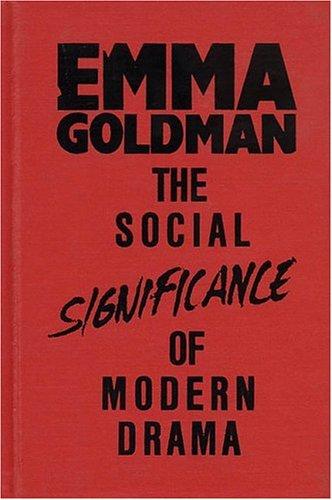
The social significance of the modern drama
Emma Goldman
Summary (Spoiler-Free)
In 'The Social Significance of the Modern Drama,' Emma Goldman explores the transformative power of contemporary theater and its impact on society. She delves into how modern plays reflect and challenge social norms, offering critical insights into the human condition. Goldman advocates for the importance of drama as a vehicle for social change, emphasizing the need for artistic expression to address pressing societal issues. This work serves as both a critique and an appreciation of the theatrical landscape of her time.
Who Should Read This
This book is a must-read for anyone passionate about the intersection of art and social justice. If you enjoy thought-provoking critiques of culture and seek to understand the power of drama in shaping societal values, you'll find Goldman's insights compelling.
Frequently Asked Questions
What is the reading order for this book within Emma Goldman's works?+
This book is a standalone work by Emma Goldman and does not belong to a series, allowing readers to approach it independently. However, those who appreciate Goldman's perspectives may find value in exploring her other essays and writings that touch on anarchism, feminism, and social critique, as they offer a broader understanding of her philosophical views.
Is this book suitable for all audiences, and are there any notable content themes?+
Goldman's exploration of modern drama engages with themes of social justice, individual freedom, and the critique of societal norms. While the book is intellectually stimulating and insightful, it may include discussions that are more appropriate for mature audiences due to the complexity of its themes. Readers who appreciate deep philosophical inquiries into social constructs will find this work particularly resonant.
Are there any adaptations or alternative formats available for this book?+
As of now, 'The Social Significance of the Modern Drama' has not been adapted into film or theater, which is somewhat expected given its analytical nature. However, it is available in print and various digital formats, including eBooks and audiobooks, making it accessible for readers who prefer different reading experiences. Audiobook versions can offer an engaging way to absorb Goldman's ideas, particularly for those who enjoy listening while on the go.
What distinguishes this book from other works in the drama genre?+
Goldman's work stands out for its intellectual rigor and socio-political commentary, which is less common in traditional drama literature. Rather than focusing solely on the narratives or achievements of individual plays, Goldman analyzes the broader implications of drama in society, making her insights uniquely relevant. This approach encourages readers to consider theater as a critical lens through which to view cultural and social dynamics.
What type of reader is likely to enjoy this book?+
Readers who are interested in social theory, cultural criticism, and the role of art in society will find Goldman's work particularly engaging. Those who appreciate a blend of historical context with contemporary relevance will resonate with her thought-provoking arguments. Additionally, individuals drawn to feminist literature and political philosophy may find Goldman's perspectives on drama and its social significance compelling and enlightening.
Similar Books You'll Love

0.0(0 ratings)
Rate this book:
Book at a Glance
~5 hr 47 min to read
- Pages
- 326
- First published
- 1914
- Original language
- EN