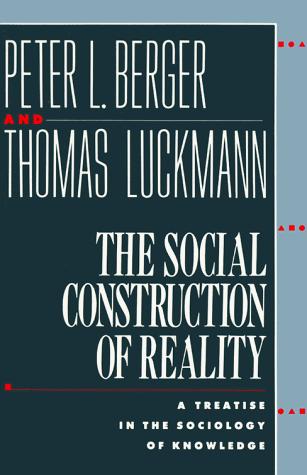
The social construction of reality
Peter L. Berger, Thomas Luckmann, David Colacci, Berger, Peter L., Luckmann, Thomas A.
Summary (Spoiler-Free)
In 'The Social Construction of Reality,' Peter L. Berger and Thomas Luckmann explore how human interactions shape our understanding of the world. They dissect the processes through which societal norms and knowledge are created, maintained, and transformed. This foundational text in sociology delves into the intricate relationship between reality and perception, encouraging readers to reflect on how social contexts influence individual beliefs and behaviors.
Who Should Read This
If you're intrigued by the ways in which society shapes our perceptions and reality, this book is a thought-provoking read. It's particularly suited for those who enjoy philosophical discussions about social constructs and their implications in everyday life.
Frequently Asked Questions
Is 'The Social Construction of Reality' part of a series, and how does it fit into the larger academic discourse?+
'The Social Construction of Reality' is a standalone work and is not part of a series. However, it serves as a cornerstone in the field of sociology and philosophy, influencing a broad range of academic discussions. The book is often referenced in courses covering social theory, epistemology, and cultural studies, making it a significant reference point for students and scholars alike.
What kind of audience is this book appropriate for, and are there any content notes?+
This book is predominantly aimed at readers with an interest in philosophy, sociology, and social theory. It is suitable for university students, academics, and anyone curious about the foundations of social constructs. While the book does not contain explicit content, readers should be prepared for dense theoretical discussions and complex ideas that may require careful consideration and reflection.
Are there any adaptations available for this book, such as audiobooks or films?+
As of now, 'The Social Construction of Reality' has not been adapted into a film. However, it is available in various formats, including print and digital editions. Additionally, there are audiobook versions available, which may provide a more accessible way for readers to engage with the material, especially for those who prefer auditory learning or have busy lifestyles.
What makes 'The Social Construction of Reality' distinct within the philosophy genre?+
'The Social Construction of Reality' stands out in the philosophy genre due to its pioneering exploration of the interplay between society and individual perception. Unlike many philosophical works that focus solely on abstract concepts, this book emphasizes practical implications and real-world applications of social constructs. Its interdisciplinary approach integrates sociology, psychology, and philosophy, offering a comprehensive understanding of how our realities are shaped by social interactions.
What type of reader is likely to enjoy this book the most?+
Readers who enjoy deep intellectual engagement and are fascinated by the intricacies of human society will likely find this book compelling. Those who appreciate philosophical inquiries into how culture and context inform our understanding of reality will resonate with Berger and Luckmann's arguments. Additionally, it appeals to critical thinkers who thrive on analyzing the foundations of knowledge and the nature of social phenomena.
Similar Books You'll Love

0.0(0 ratings)
Rate this book:
Book at a Glance
~3 hr 53 min to read
- Pages
- 219
- First published
- 1966
- Original language
- EN