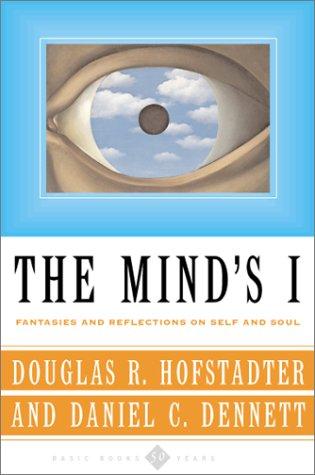
The Mind's I
Douglas R. Hofstadter, Daniel C. Dennett
Summary (Spoiler-Free)
In 'The Mind's I', Hofstadter and Dennett explore the intricate nature of consciousness and the self through a collection of essays and thought experiments. This philosophical work delves into the relationship between the mind and the brain, presenting various perspectives on identity, free will, and the essence of human thought. With a blend of humor and intellectual rigor, the authors invite readers to engage with profound questions about existence and cognition.
Who Should Read This
If you are someone who enjoys deep philosophical inquiries and the exploration of consciousness, this book will resonate with you. It offers a unique blend of wit and scholarly insight that will appeal to those intrigued by the complexities of the mind.
Frequently Asked Questions
What is the reading order for 'The Mind's I' and does it connect to any other works?+
'The Mind's I' is a standalone work by Douglas R. Hofstadter and Daniel C. Dennett, meaning that it does not belong to a series and does not require prior reading of other texts by the authors. However, both authors have written extensively on related topics in philosophy and cognitive science. Readers may find it enriching to explore additional essays and works by Hofstadter and Dennett, as they often revisit themes of consciousness and identity, but it is not necessary for understanding this book.
What age group is this book appropriate for, and are there any content notes?+
'The Mind's I' is suitable for mature readers, particularly those in high school and beyond, as it tackles complex philosophical concepts that may be challenging for younger audiences. Readers should be prepared for discussions that involve abstract reasoning, existential questions, and a critical examination of self-identity. While the content is intellectually stimulating, it does not contain graphic material or explicit language, focusing instead on thought-provoking ideas and theories.
Is there an audiobook or other adaptations available for 'The Mind's I'?+
As of now, 'The Mind's I' is available in multiple formats, including hardcover, paperback, and e-book. An audiobook version is also available, offering an engaging way to experience the philosophical discussions presented in the text. The audiobook format can be particularly beneficial for those who enjoy auditory learning or wish to absorb the material while on the go. However, there are no film adaptations of this book, as its nature is deeply rooted in philosophical discourse rather than narrative storytelling.
What distinguishes 'The Mind's I' within the philosophy genre?+
'The Mind's I' stands out in the philosophy genre due to its innovative approach, blending essays with thought experiments that encourage active engagement from readers. Hofstadter and Dennett utilize a conversational tone, often incorporating humor and personal anecdotes, which makes complex ideas more accessible. The book's interdisciplinary nature, drawing from cognitive science, psychology, and philosophical inquiry, offers a comprehensive examination of consciousness and self, setting it apart from more traditional philosophical texts that may adhere to a stricter format.
What type of reader is likely to enjoy 'The Mind's I'?+
Readers who are curious about the nature of consciousness, identity, and the mechanics of thought will find 'The Mind's I' particularly engaging. This book appeals to those who enjoy philosophical debates and are willing to challenge their own perspectives on what it means to be human. Additionally, it is well-suited for readers who appreciate a blend of intellectual rigor and playful exploration, making it a compelling choice for both philosophy enthusiasts and casual readers looking to deepen their understanding of the mind.
Similar Books You'll Love

0.0(0 ratings)
Rate this book:
Book at a Glance
~9 hr 5 min to read
- Pages
- 512
- First published
- 1962
- Original language
- EN