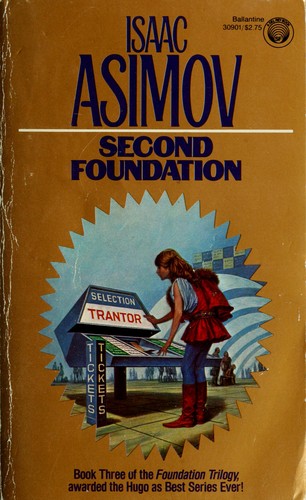
Second Foundation
Isaac Asimov
Summary (Spoiler-Free)
In 'Second Foundation,' the epic saga of the Galactic Empire continues as the enigmatic Second Foundation emerges into the spotlight. This mysterious group of mentalics seeks to guide humanity's future, hidden from the prying eyes of the First Foundation. As tensions rise and the threat of chaos looms, a battle of wits ensues, testing the very fabric of political power and human intellect. Throughout this engaging narrative, themes of manipulation and foresight play a crucial role in shaping the universe's destiny.
Who Should Read This
If you revel in thought-provoking narratives that explore the deeper intricacies of human nature and society, 'Second Foundation' is a compelling choice. The blend of sociopolitical intrigue and psychological exploration will resonate with readers who enjoy layered storytelling and speculative concepts.
Frequently Asked Questions
Is 'Second Foundation' part of a series or a standalone book?+
'Second Foundation' is the fifth and final novel in Isaac Asimov's renowned Foundation series. While it is part of a larger narrative arc, it can be read as a standalone book due to its self-contained plot and themes. However, readers may appreciate the broader context and character development by exploring the earlier books in the series, which set the stage for the events that unfold in this installment.
What age group is 'Second Foundation' suitable for, and are there any content notes?+
'Second Foundation' is generally appropriate for young adult readers and above, given its complex themes and intellectual depth. The book contains minimal violence and no explicit content, making it accessible to a wide audience. Asimov's writing is more focused on ideas and philosophical questions rather than graphic scenarios, appealing to those who enjoy speculative fiction that prompts critical thinking and reflection.
Are there audiobook or film adaptations of 'Second Foundation' available?+
Yes, 'Second Foundation' is available in audiobook format, allowing listeners to immerse themselves in Asimov's intricate universe through engaging narration. While there is no direct film adaptation of this specific book, the Foundation series as a whole has inspired various media interpretations, including a recent television adaptation that aims to bring Asimov's visionary work to a wider audience. Fans of the series may find these adaptations intriguing, although they may differ significantly from the source material.
What sets 'Second Foundation' apart within the science fiction genre?+
'Second Foundation' stands out in the science fiction genre due to its unique blend of psychological intrigue and socio-political commentary. Asimov delves deep into the themes of mentalism and the manipulation of society, raising questions about free will, governance, and the role of knowledge in shaping the future. This focus on the cerebral aspects of conflict, rather than physical confrontations, offers a refreshing take on the genre, appealing to readers who enjoy narratives driven by intellect and philosophical exploration.
What type of reader is likely to enjoy 'Second Foundation'?+
Readers who appreciate intricate world-building, complex characters, and thought-provoking themes will likely find 'Second Foundation' captivating. Those drawn to narratives that challenge conventional perspectives and explore the implications of advanced technology and social structures will resonate with Asimov's vision. Additionally, fans of speculative fiction who enjoy pondering the moral and ethical dimensions of progress and governance will find rich content within its pages.
Similar Books You'll Love

0.0(0 ratings)
Rate this book:
Book at a Glance
~5 hr 23 min to read
- Pages
- 304
- First published
- 1953
- Original language
- PT