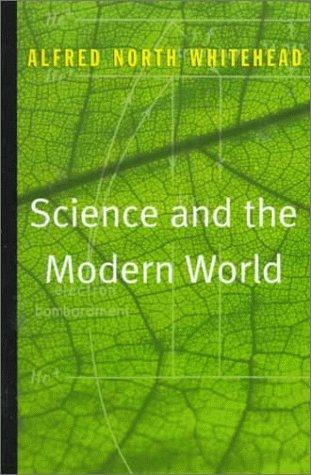
Science and the modern world
Alfred North Whitehead
Summary (Spoiler-Free)
In 'Science and the Modern World', Alfred North Whitehead explores the profound relationship between scientific thought and the philosophical underpinnings of modern society. He delves into the historical development of science, examining how it has shaped human understanding and culture. With a blend of clarity and depth, Whitehead articulates a vision of science that is not merely about empirical data but is deeply intertwined with the philosophical questions of existence and meaning.
Who Should Read This
For those who enjoy probing the intersections of science and philosophy, Whitehead's work serves as an enlightening exploration. If you seek to understand how scientific advancements influence our worldview, this book is a compelling read.
Frequently Asked Questions
What reading order should I follow for this book?+
As 'Science and the Modern World' is a standalone work by Alfred North Whitehead, there is no specific reading order required for this book. However, readers interested in Whitehead's broader philosophical contributions may benefit from exploring his other works afterward, such as 'Process and Reality' or 'Adventures of Ideas'. Understanding his earlier philosophies can add depth to your appreciation of his ideas in this text, but it's not a prerequisite.
Is this book appropriate for all audiences?+
While 'Science and the Modern World' offers significant insights, it is primarily aimed at readers with a background or strong interest in philosophy and science. The text engages with complex ideas that may challenge casual readers. It is suitable for university students, scholars, and those who enjoy deep intellectual discussions. Readers should be prepared for a thoughtful examination of how science interacts with modern life, which may involve abstract concepts and philosophical terminology.
Are there any adaptations available for this book?+
'Science and the Modern World' has not been adapted into a film or television series, nor is there a widely recognized audiobook version. The text remains primarily in print format, emphasizing its role as a philosophical treatise. However, readers may find lectures or discussions based on Whitehead's philosophies available in various formats, including podcasts and academic presentations, which can complement their reading experience.
What makes this book distinct in its genre?+
'Science and the Modern World' stands out in the philosophy genre due to its unique synthesis of scientific inquiry and philosophical analysis. Whitehead's approach goes beyond traditional philosophy by engaging directly with the implications of scientific progress on human thought and culture. His interdisciplinary perspective enriches the discourse on science, making it not only an examination of facts and figures but also a profound inquiry into the nature of reality and existence, setting it apart from many contemporaneous works.
What kind of reader tends to enjoy this book the most?+
Readers who are intellectually curious and have an affinity for both science and philosophy are likely to appreciate 'Science and the Modern World'. Those who enjoy exploring the historical context of scientific developments and their philosophical ramifications will find Whitehead's insights particularly engaging. Additionally, individuals interested in the interplay between empirical research and abstract thought may find this book resonates deeply with their interests.
Similar Books You'll Love

0.0(0 ratings)
Rate this book:
Book at a Glance
~4 hr 22 min to read
- Pages
- 246
- First published
- 1925
- Original language
- EN