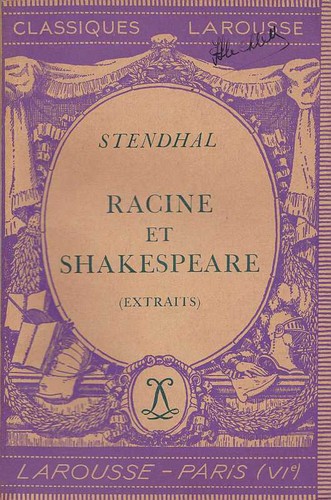
Racine et Shakespeare (1818-1825)
Stendhal
Summary (Spoiler-Free)
In 'Racine et Shakespeare,' Stendhal embarks on a profound exploration of the evolution of drama, juxtaposing the classical works of Racine with the emerging romantic style exemplified by Shakespeare. This analytical treatise delves into the aesthetic and emotional dimensions of these playwrights, revealing the contrasts in their approaches to character development, plot structure, and the role of passion in storytelling. Stendhal's incisive commentary and personal reflections on the significance of these literary giants provide readers with a thought-provoking perspective on the trajectory of theater.
Who Should Read This
If you have a passion for literary criticism and a keen interest in the intersection of classical and romantic drama, this book will resonate with you. Stendhal’s sharp insights and historical context offer a rich experience for anyone seeking to deepen their understanding of theatrical evolution.
Frequently Asked Questions
Is 'Racine et Shakespeare' part of a series, and how does it fit into the broader context of Stendhal's work?+
'Racine et Shakespeare' is a standalone work and not part of a series. It represents a significant intellectual effort by Stendhal to analyze and critique the development of drama in his time. While it stands alone, it is often discussed in the context of Stendhal's broader literary contributions, particularly his insights into character and emotion, which are evident in his novels as well. This treatise complements his other works by providing a deeper look into his thoughts on drama, making it an essential read for those interested in his literary philosophy.
What age group or audience is this book appropriate for?+
'Racine et Shakespeare' is primarily aimed at an adult audience, particularly those with an interest in literature, drama, and cultural criticism. The text contains complex themes and discussions that may be best appreciated by readers with some background in literary studies or an appreciation for the historical context of drama. High school students studying literature, as well as university students and professionals in the field, may find it particularly valuable for its in-depth analysis. However, casual readers who enjoy exploring the nuances of classic literature may also appreciate Stendhal's insights.
Are there any adaptations or alternative formats available for this book?+
'Racine et Shakespeare' has not been widely adapted into other formats like film or theater, primarily due to its nature as a literary critique rather than a narrative work. However, the book can be found in various formats, including print and digital editions, making it accessible for modern readers. Audiobook versions may also be available, allowing for an engaging listening experience. Readers interested in the context of Stendhal's analysis may also find it beneficial to explore secondary literature that discusses his ideas and their influence on contemporary drama.
What distinguishes 'Racine et Shakespeare' within the genre of literary criticism?+
'Racine et Shakespeare' stands out in literary criticism for its unique blend of personal reflection and analytical discourse. Stendhal’s approach is not purely academic; he interweaves his own emotions and experiences with his interpretations, providing a deeply personal lens through which to view the works of Racine and Shakespeare. This combination of subjective insight and objective analysis creates a rich tapestry of thought that invites readers to engage with the text on multiple levels. Additionally, Stendhal's emphasis on passion and the psychological depth of characters marks a significant departure from traditional critiques of the time, making this work a pioneering contribution to the field.
What kind of readers are likely to enjoy 'Racine et Shakespeare'?+
Readers who are drawn to intellectual explorations of literature and enjoy delving into the mechanics of storytelling will likely find 'Racine et Shakespeare' appealing. Those with an appreciation for the historical evolution of drama and the interplay between classical and romantic influences will benefit from Stendhal’s insights. Additionally, individuals who enjoy literary criticism that incorporates personal narrative and emotional resonance will appreciate the depth and passion of Stendhal's writing. This book caters to anyone seeking to enrich their understanding of dramatic literature and its lasting impact on culture.
Similar Books You'll Love
0.0(0 ratings)
Rate this book:
Book at a Glance
~3 hr 31 min to read
- Pages
- 198
- First published
- 1907
- Original language
- FR