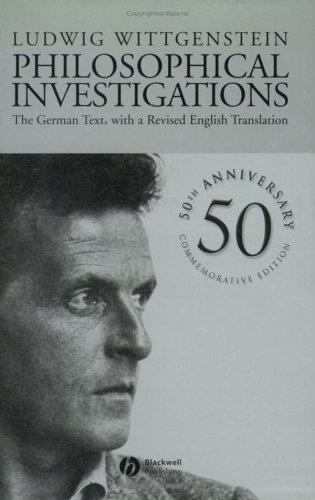
Philosophische Untersuchungen
Ludwig Wittgenstein
Summary (Spoiler-Free)
Ludwig Wittgenstein's 'Philosophische Untersuchungen' explores the intricacies of language and meaning, delving into how our linguistic practices shape our understanding of the world. Through a series of reflections and dialogues, Wittgenstein challenges traditional philosophical ideas and encourages readers to reconsider the connection between language and reality. This work is foundational to contemporary philosophy, particularly in areas concerning the philosophy of language and mind, offering profound insights into the nature of human thought and communication.
Who Should Read This
If you are intrigued by the complexities of language and its impact on our perception of reality, this philosophical treatise may resonate deeply with you. It's particularly suited for readers who enjoy engaging with challenging ideas and appreciate nuanced discussions about the nature of meaning.
Frequently Asked Questions
Is 'Philosophische Untersuchungen' part of a series or a standalone work?+
'Philosophische Untersuchungen' is a standalone work by Ludwig Wittgenstein, not part of any series. This allows readers to engage directly with its content without needing familiarity with other texts. Wittgenstein’s exploration of language and meaning stands on its own, making it accessible for readers interested in philosophy, regardless of their previous exposure to his other works.
What audience is 'Philosophische Untersuchungen' appropriate for?+
This book is best suited for readers who have a keen interest in philosophy, particularly those studying or familiar with analytic philosophy and the philosophy of language. The content is dense and requires thoughtful engagement, making it more appropriate for adult readers, students, or anyone with a strong interest in philosophical discourse. It may be challenging for casual readers without a background in these areas, as Wittgenstein's ideas often demand careful consideration and reflection.
Are there any adaptations or formats available for 'Philosophische Untersuchungen'?+
While 'Philosophische Untersuchungen' is primarily available in print format, there are also digital editions for e-readers. Additionally, audiobooks may exist, though they are less common for this specific philosophical text. Various secondary sources, such as lectures and discussions available online, can help illuminate Wittgenstein's ideas for those who prefer auditory learning or seek to deepen their understanding of the material.
What makes 'Philosophische Untersuchungen' distinct within the philosophy genre?+
'Philosophische Untersuchungen' is distinct for its innovative approach to language and meaning, diverging from traditional philosophical methods. Wittgenstein employs a conversational style, using examples and thought experiments to illustrate his points, which sets it apart from more formal philosophical texts. His emphasis on the use of language in everyday contexts challenges readers to reconsider long-held beliefs about meaning, making it a pivotal work that continues to influence contemporary philosophical thought.
What kind of reader tends to enjoy 'Philosophische Untersuchungen'?+
Readers who enjoy engaging with complex philosophical arguments and exploring the nuances of language will likely appreciate 'Philosophische Untersuchungen'. Those who value critical thinking and are open to questioning established notions about meaning and understanding will find this work particularly rewarding. The book appeals to both scholars and enthusiasts of philosophy looking for a deep dive into the interplay between language, thought, and reality.
Similar Books You'll Love
0.0(0 ratings)
Rate this book:
Book at a Glance
~4 hr 26 min to read
- Pages
- 250
- First published
- 1953
- Original language
- EN