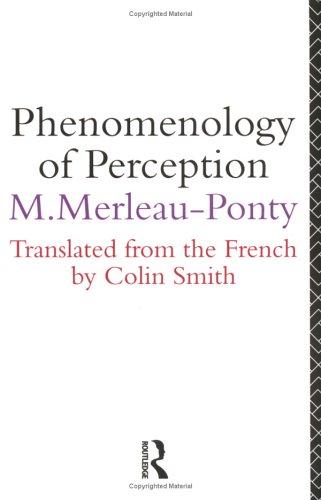
Phénoménologie de la perception
Maurice Merleau-Ponty
Summary (Spoiler-Free)
In 'Phénoménologie de la perception', Maurice Merleau-Ponty explores the intricate relationship between perception and our understanding of existence. He delves into how our bodily experiences shape our consciousness, challenging traditional philosophical notions that separate mind from body. Through a rich examination of sensory experiences, he articulates a vision of human perception that is deeply embedded in the world around us, emphasizing the significance of the lived body as a starting point for all knowledge.
Who Should Read This
This book is highly recommended for readers who are intrigued by existential questions and the philosophy of perception. If you enjoy deep, reflective texts that encourage a reconsideration of everyday experiences through a philosophical lens, this work will resonate with you.
Frequently Asked Questions
Is 'Phénoménologie de la perception' part of a series, and how does it fit within philosophical literature?+
'Phénoménologie de la perception' is a standalone work and not part of any series. Merleau-Ponty’s exploration is crucial in the landscape of 20th-century philosophy, particularly in the context of existentialism and phenomenology. It builds on earlier philosophical frameworks while establishing its unique perspective on perception and embodiment, influencing various fields including psychology, cognitive science, and art theory.
What audience is this book appropriate for, and are there any content notes to consider?+
This book is primarily aimed at readers with a strong interest in philosophy, especially those who are familiar with existential and phenomenological thought. It may contain complex theories and terminology that can be challenging for casual readers. Additionally, the text discusses themes that explore human existence and perception, which may provoke deep reflection; readers should approach it with an open mind and readiness for philosophical inquiry.
Are there any adaptations of 'Phénoménologie de la perception' available, such as audiobooks or films?+
'Phénoménologie de la perception' is primarily a philosophical text and does not have a well-known film adaptation. However, there are various academic lectures and discussions available in audio and video formats that delve into Merleau-Ponty's ideas. Audiobook versions may also be available, providing an accessible way for readers to engage with this philosophical work while on the go.
What makes 'Phénoménologie de la perception' distinct within the philosophy genre?+
Merleau-Ponty's work stands out in philosophy for its emphasis on the embodied experience of perception. Unlike many philosophical texts that prioritize abstract reasoning, he grounds his analysis in sensory experience and the physicality of being. This focus on the lived body as the primary site of knowledge offers a fresh perspective and has inspired numerous debates on the nature of consciousness, perception, and reality.
What type of reader is likely to enjoy 'Phénoménologie de la perception'?+
Readers who appreciate dense philosophical texts that challenge conventional thinking about perception and reality will likely find this book rewarding. It is particularly suited for those who enjoy engaging with complex ideas and who are open to exploring the intersections of philosophy, psychology, and the arts. If you have a passion for existential thought and the nuances of human experience, this work will resonate with your intellectual pursuits.
Similar Books You'll Love

0.0(0 ratings)
Rate this book:
Book at a Glance
~8 hr 16 min to read
- Pages
- 466
- First published
- 1945
- Original language
- EN