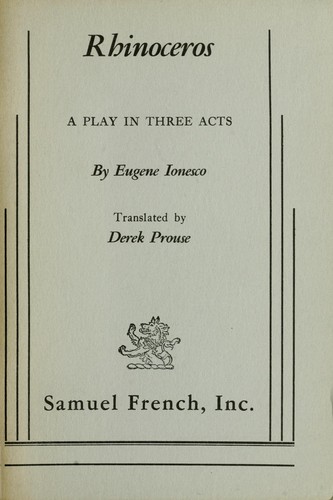
Le rhinocéros
Eugène Ionesco
Summary (Spoiler-Free)
In Eugène Ionesco's 'Le rhinocéros', the tranquil existence of a small town is shattered when its inhabitants begin transforming into rhinoceroses. This absurdist play explores themes of conformity, individuality, and the human condition through sharp wit and striking imagery. As the townspeople grapple with their newfound identities, the protagonist stands as a lone voice of reason, questioning the nature of society and the choices we make.
Who Should Read This
If you enjoy thought-provoking theater that challenges societal norms and embraces the absurd, this play is definitely for you. Its blend of humor and existential inquiry will resonate with those who appreciate a deeper layer to their drama.
Frequently Asked Questions
Is 'Le rhinocéros' part of a series, and what is the recommended reading order?+
'Le rhinocéros' is a standalone play written by Eugène Ionesco, first published in 1959. Therefore, there is no series or specific reading order to follow. Readers can approach this work independently without needing to familiarize themselves with other texts or plays by the author.
What type of audience is this play appropriate for, and are there any content notes?+
'Le rhinocéros' is generally suitable for a mature audience due to its themes of conformity, social pressure, and the absurdities of human nature. While it contains no graphic content, the existential themes might be challenging for younger viewers. This play often evokes deep reflection on societal behaviors, making it more appropriate for readers and viewers who can engage with its philosophical questions.
Are there adaptations of 'Le rhinocéros' available in other formats?+
Yes, 'Le rhinocéros' has seen various adaptations beyond its original play format. It has been performed widely in theaters around the world, and there are also recorded performances available. Additionally, audiobooks of the play can be found, allowing listeners to experience the dialogue and themes in an audio format, complementing its textual richness.
What makes 'Le rhinocéros' distinct within its genre?+
'Le rhinocéros' stands out in the realm of absurdist drama due to its unique blend of humor and profound social commentary. Ionesco's use of surreal elements to critique conformity and the nature of human existence sets it apart from other plays. Its ability to provoke thought while entertaining audiences with absurd scenarios makes it a significant piece in the landscape of modern theater.
What kind of reader or viewer tends to enjoy 'Le rhinocéros'?+
Readers and viewers who appreciate absurdist literature and theater will likely find 'Le rhinocéros' compelling. Those who enjoy plays that challenge conventional narratives and provoke introspection about societal norms and individual choices will resonate with Ionesco's work. Additionally, fans of character-driven stories that explore existential themes will find much to engage with in this thought-provoking play.
Similar Books You'll Love
0.0(0 ratings)
Rate this book:
Book at a Glance
~3 hr 32 min to read
- Pages
- 199
- First published
- 1959
- Original language
- EN