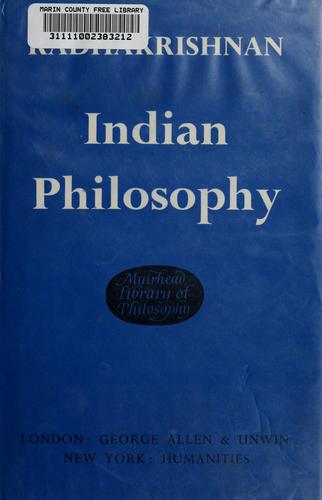
Indian philosophy
Sarvepalli Radhakrishnan
Summary (Spoiler-Free)
In 'Indian Philosophy,' Sarvepalli Radhakrishnan presents a comprehensive exploration of India's rich philosophical traditions. Delving into key concepts from ancient texts, he articulates the unique perspectives of Indian thought, juxtaposing them with Western philosophies. This work not only highlights the historical development of ideas but also emphasizes their relevance in modern discourse, making it a vital resource for anyone interested in the intersection of culture and philosophy.
Who Should Read This
If you are intrigued by the depths of philosophical inquiry and seek to understand the nuances of Indian thought, this book is an invaluable read. Radhakrishnan's eloquent prose and insightful analysis will resonate with those who appreciate intellectual exploration.
Frequently Asked Questions
What makes 'Indian Philosophy' distinct in its genre?+
'Indian Philosophy' stands out for its thorough examination of a wide array of philosophical ideas from India, articulated by one of the country's most respected thinkers, Sarvepalli Radhakrishnan. Unlike many Western philosophical texts that often focus on a narrow set of ideas, Radhakrishnan provides a holistic view of Indian philosophical traditions, from Vedanta to Buddhism, presenting them in a manner that is both accessible and intellectually rigorous. His ability to bridge cultural and philosophical divides makes this book a seminal work that has influenced scholars and lay readers alike.
Is there an audiobook version or any adaptations available for this book?+
'Indian Philosophy' is available in several formats, including print and eBook editions. While an audiobook version may not be widely available, there are various educational resources and lectures that discuss the book's themes and ideas. For those interested in a more interactive experience, there are lectures and discussions available online that can enhance understanding of Radhakrishnan's perspectives. However, readers looking for a direct audio experience may need to rely on supplementary materials rather than a dedicated audiobook.
Who is the intended audience for 'Indian Philosophy'?+
This book is primarily aimed at students, scholars, and enthusiasts of philosophy, particularly those interested in Indian thought. However, it also appeals to general readers who are curious about philosophical ideas and their implications in contemporary society. Radhakrishnan's writing can be challenging, so it may be best suited for readers who have a foundational understanding of philosophy or those willing to engage deeply with complex ideas. Its rich content makes it a valuable resource for anyone looking to expand their philosophical horizons.
How does 'Indian Philosophy' fit into the broader context of philosophical literature?+
'Indian Philosophy' is significant not only for its content but also for its contextualization of Indian thought within the global philosophical landscape. Radhakrishnan effectively draws parallels and contrasts between Eastern and Western philosophies, thereby enriching the discourse on universal philosophical questions. The book serves as a bridge, helping Western audiences appreciate the depth and diversity of Indian philosophical traditions, which have often been overlooked in mainstream philosophical discussions. This contextual approach adds a layer of complexity and uniqueness to the text.
In what order should I read this book if I am exploring philosophy?+
'Indian Philosophy' can be read as a standalone work, but it is particularly rewarding for those who have some background in philosophical thought. If you are new to philosophy, it might be beneficial to start with introductory texts that cover basic philosophical concepts before delving into Radhakrishnan's work. This will provide you with the necessary framework to appreciate the nuances of Indian philosophy presented in the book. For readers already familiar with philosophical discussions, jumping straight into this text will offer profound insights and stimulate further inquiry.
Similar Books You'll Love

0.0(0 ratings)
Rate this book:
Book at a Glance
~14 hr 19 min to read
- Pages
- 807
- First published
- 1923
- Original language
- EN