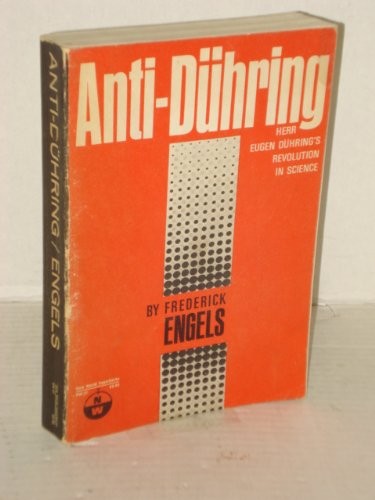
Herrn Eugen Dührings Umwälzung der Wissenschaft
Friedrich Engels
Summary (Spoiler-Free)
In 'Herrn Eugen Dührings Umwälzung der Wissenschaft', Friedrich Engels engages in a profound critique of the philosophical ideas proposed by Eugen Dühring, a contemporary thinker. Through this comprehensive examination, Engels explores the intersections of philosophy, economics, and social theory, laying the groundwork for a Marxist understanding of science and society. The work serves as both a defense of dialectical materialism and a call to arms against idealism. With rigorous argumentation, Engels articulates his vision for a scientifically grounded approach to social issues and human progress.
Who Should Read This
This book is ideal for readers who are passionate about philosophy and interested in the historical debates that shaped socialist thought. If you appreciate dense, intellectual discussions that challenge conventional wisdom, you'll likely find Engels' work both enlightening and provocative.
Frequently Asked Questions
What is the reading order for this book in relation to other works by Friedrich Engels?+
'Herrn Eugen Dührings Umwälzung der Wissenschaft' is a standalone work and does not belong to a series. While it can be read independently, it is beneficial to approach it with some background knowledge of Engels' other writings, as well as Karl Marx's works. Readers familiar with Marxist theory will find contextual references within this book that resonate with ideas presented in 'The Communist Manifesto' and 'Das Kapital'. However, it is not strictly necessary to read Engel's earlier works to understand this text.
What kind of content can readers expect in terms of audience appropriateness?+
This book is primarily aimed at an audience with a strong interest in philosophy, political theory, and social sciences. It delves into complex ideas and critiques that may not be suitable for casual readers or those unfamiliar with philosophical discourse. The text employs technical language and assumes a certain level of intellectual engagement. While it does not contain graphic content, the themes discussed—such as class struggle, materialism, and social dynamics—may provoke deep reflection and debate, making it more suitable for mature readers and scholars.
Are there any adaptations or alternative formats available for this book?+
Currently, 'Herrn Eugen Dührings Umwälzung der Wissenschaft' is primarily available in print and as an eBook. While an audiobook version is not widely available, there may be audio recordings of selected passages or discussions surrounding the text in academic settings. Many editions also include critical essays and analyses that enhance the reading experience. For those interested in engaging with the material in a structured setting, look for academic courses or lectures that may reference this work.
What distinguishes this book within the philosophical genre?+
Engels' work stands out as a critical response to idealist philosophy, particularly that of Eugen Dühring, which was influential in the late 19th century. Unlike many philosophical texts that may focus on abstract theorization, Engels grounds his arguments in materialist philosophy, emphasizing the role of economic and social realities in shaping human thought and society. This approach not only critiques existing ideologies but also advocates for a scientific understanding of social phenomena, setting a precedent for later Marxist literature. Its historical significance and rigorous critique make it a unique contribution to both philosophy and political theory.
What type of reader is most likely to enjoy this book?+
Readers who are drawn to philosophical rigor and social critique will likely find 'Herrn Eugen Dührings Umwälzung der Wissenschaft' compelling. Those with an interest in the historical development of socialist thought, particularly in the context of late 19th-century Europe, will appreciate its depth and relevance. Academics, students, and intellectually curious individuals who enjoy dissecting complex ideas and engaging in philosophical dialogue will find this text both challenging and rewarding. If you thrive on exploring the intersections of philosophy, politics, and social theory, this book is tailored for you.
Similar Books You'll Love

0.0(0 ratings)
Rate this book:
Book at a Glance
~8 hr 48 min to read
- Pages
- 496
- First published
- 1878
- Original language
- EN