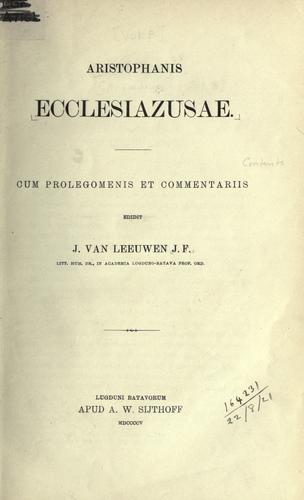
Ecclesiazusae
Aristophanes
Summary (Spoiler-Free)
Ecclesiazusae, a classic comedic play by Aristophanes, explores themes of gender roles and societal structures in ancient Athens through a satirical lens. The story centers on a group of women who, tired of male-dominated governance, take it upon themselves to assume political power. Their bold experiment in creating a society based on equality and communal living leads to humorous and thought-provoking situations. With clever dialogue and sharp wit, Aristophanes invites readers to reflect on the absurdities of politics and the nature of democracy.
Who Should Read This
If you enjoy sharp satire that challenges societal norms, Ecclesiazusae offers a delightful blend of humor and social commentary. This play is perfect for those who appreciate clever dialogue and a playful take on serious themes.
Frequently Asked Questions
Is Ecclesiazusae part of a series, and how does it fit into Aristophanes' body of work?+
Ecclesiazusae is a standalone play and does not belong to any series. As one of the later works of Aristophanes, it reflects his evolving perspective on Athenian society and politics. While earlier plays often focused on direct satire of contemporary figures and events, Ecclesiazusae delves into broader themes such as gender dynamics and utopian visions. It’s a fascinating addition to Aristophanes' oeuvre, showcasing his enduring wit and the timeless relevance of his social critiques.
What audience is Ecclesiazusae appropriate for, and are there any content notes?+
Ecclesiazusae is generally suitable for mature audiences due to its themes and humor, which include discussions of sexuality, gender roles, and political satire. Readers should be aware that the play reflects the cultural context of ancient Athens, which may feel anachronistic or provocative to modern sensibilities. Those interested in the historical aspects of gender and governance will find the play especially engaging, but it may not be suitable for younger audiences due to its adult themes and comedic approaches to serious issues.
Are there any adaptations or alternative formats available for Ecclesiazusae?+
Ecclesiazusae has been adapted into various formats, including stage productions and scholarly translations. While it may not have a widely recognized film adaptation, many theater companies have brought this play to life through performances that emphasize its comedic elements. Additionally, audio versions and e-books are available, providing options for readers who prefer listening to the text or reading digitally. These adaptations often highlight the play's humor and social commentary, making it accessible to contemporary audiences.
What sets Ecclesiazusae apart from other works in the comedy genre?+
Ecclesiazusae stands out in the comedy genre due to its innovative approach to themes of gender and governance. Unlike many comedic works that rely on slapstick or farcical elements, Aristophanes uses intelligent dialogue and character-driven humor to dissect serious societal issues. The play's exploration of female empowerment and political utopia is both humorous and provocative, prompting readers to question the status quo. This blend of comedy with thought-provoking commentary makes Ecclesiazusae a unique entry in the canon of comedic literature.
What type of reader is likely to enjoy Ecclesiazusae?+
Readers who enjoy witty satire, social commentary, and historical plays will likely find Ecclesiazusae appealing. Those with an interest in gender studies or political discourse will appreciate the play's exploration of women's roles in society and governance. Additionally, fans of classic literature who seek humor interwoven with thoughtful critique will enjoy Aristophanes' distinctive style. If you revel in plays that challenge societal norms while providing laughs, this work is well-suited to your tastes.
Similar Books You'll Love

0.0(0 ratings)
Rate this book:
Book at a Glance
~4 hr 36 min to read
- Pages
- 259
- First published
- 1881
- Original language
- —