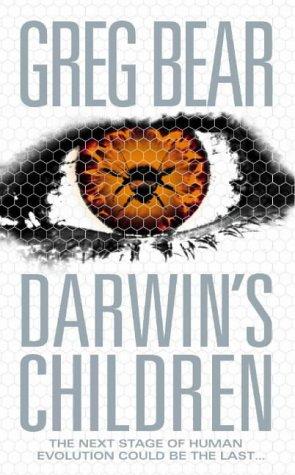
Darwin's children
Greg Bear, Jean-Daniel Brèque, Scott Brick
Summary (Spoiler-Free)
In 'Darwin's Children,' the future of humanity hangs in the balance as a new generation of children emerges with extraordinary abilities. These children, born in the wake of a global epidemic, challenge the very essence of what it means to be human. As society grapples with fear and prejudice, the story unfolds through the eyes of those who must navigate a world fraught with conflict and hope, ultimately exploring themes of evolution, identity, and survival.
Who Should Read This
If you enjoy thought-provoking science fiction that delves into the implications of genetic evolution and societal change, this book is likely to resonate with you. It’s a captivating read for anyone who appreciates a blend of speculative concepts and deep character exploration.
Frequently Asked Questions
Is 'Darwin's Children' part of a series or a standalone novel?+
'Darwin's Children' is a standalone novel, not part of a series. Readers can enjoy this book independently, as it presents a self-contained narrative exploring themes of evolution and human society without requiring prior knowledge of any sequels or prequels. This makes it an accessible choice for those new to the author’s work or the genre itself.
What age group is 'Darwin's Children' appropriate for?+
This novel is generally suited for mature teens and adult readers due to its complex themes and some intense scenes. It tackles issues related to genetic modification, societal conflict, and the human experience, which may resonate more with older readers. While it contains elements of speculative fiction, the underlying themes may prompt deeper discussions about ethics and humanity, making it appropriate for readers who appreciate thought-provoking literature.
Are there any adaptations of 'Darwin's Children' available?+
As of now, there are no film or television adaptations of 'Darwin's Children.' However, the book has garnered interest due to its compelling narrative and rich themes, which could lend themselves well to visual storytelling. Readers who enjoy the book may hope for a future adaptation that could bring its unique vision to a broader audience.
What distinguishes 'Darwin's Children' within the science fiction genre?+
'Darwin's Children' stands out for its unique combination of genetic science and human emotion, exploring the intersection of evolution and societal acceptance. The narrative interweaves scientific concepts with personal stories, making it a rich tapestry of ideas rather than just a traditional sci-fi adventure. Its emphasis on character development and ethical dilemmas sets it apart, inviting readers to ponder the implications of human evolution in a contemporary context.
What type of reader is likely to enjoy 'Darwin's Children'?+
Readers who are drawn to speculative fiction that challenges conventional notions of humanity will likely find 'Darwin's Children' engaging. If you appreciate narratives that explore the moral implications of scientific advancement and the struggles of marginalized groups, this book may resonate with you. Fans of character-driven stories set against a backdrop of complex scientific ideas will find plenty to enjoy in this thought-provoking work.
Similar Books You'll Love

0.0(0 ratings)
Rate this book:
Book at a Glance
~11 hr 14 min to read
- Pages
- 634
- First published
- 2001
- Original language
- EN