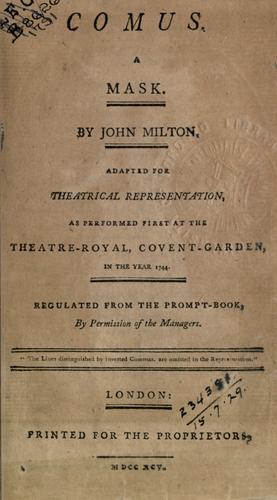
Comus
John Milton
Summary (Spoiler-Free)
In 'Comus,' John Milton weaves a rich tapestry of poetry that explores themes of virtue, temptation, and the battle between good and evil. Set in an enchanted forest, the narrative revolves around a young lady who becomes ensnared by the seductive and manipulative Comus, the god of revelry. As her brothers seek to rescue her, the work delves into the power of chastity and the strength of familial bonds, all while showcasing Milton's masterful command of language and imagery.
Who Should Read This
If you appreciate classic literature that delves into moral dilemmas and the human condition, 'Comus' is a captivating choice. Its lyrical beauty and philosophical depth make it particularly appealing to readers who enjoy poetry infused with rich symbolism and allegorical elements.
Frequently Asked Questions
Is 'Comus' part of a series, and how does it fit into Milton's body of work?+
'Comus' is a standalone work and not part of a series. It was first published in 1738 as a masque, a form of dramatic entertainment that combines poetry, music, and dance. While it is often associated with Milton’s larger oeuvre, it stands apart due to its unique structure and thematic focus. This work reflects Milton's engagement with contemporary themes of morality and virtue, offering insights into his broader philosophical and political concerns.
What age group is 'Comus' appropriate for, and are there any content notes?+
'Comus' is generally suitable for older teens and adult readers, given its complex themes and historical context. The work does explore issues of temptation and virtue, which may resonate differently depending on the reader’s perspective. While it does not contain explicit content, the underlying moral conflicts and character interactions may prompt thoughtful discussions regarding ethics, morality, and human nature, making it more appropriate for a mature audience.
Are there any adaptations of 'Comus' available in other formats?+
Yes, 'Comus' has been adapted into various formats over the years, including theatrical performances and audio recordings. Its lyrical nature lends itself well to adaptations that emphasize its poetic qualities. Readers may find audio versions that capture the rhythm and emotion of Milton's writing, enhancing the experience of his work. Additionally, some theatrical interpretations may bring a visual element that adds depth to the narrative, making it accessible to a broader audience.
What makes 'Comus' distinct within the romance genre?+
'Comus' is distinct within the romance genre due to its unique blend of allegory and moral philosophy. Unlike traditional romantic narratives that focus primarily on love stories, Milton's work intertwines themes of virtue, temptation, and redemption, challenging the characters' motivations and moral choices. This complexity elevates it beyond mere romance, positioning it as a deeper exploration of human nature and ethical dilemmas, appealing to readers who appreciate layered narratives with philosophical undertones.
What type of reader is most likely to enjoy 'Comus'?+
Readers who enjoy classic literature and poetic forms will likely find 'Comus' appealing. Those with an interest in moral philosophy, allegory, and the interplay of good versus evil will appreciate Milton's nuanced approach to storytelling. Additionally, fans of works that offer rich imagery and thoughtful reflections on human experiences will be drawn to this intricate piece, as it invites readers to ponder deeper questions about virtue and temptation in an engaging manner.
Similar Books You'll Love
0.0(0 ratings)
Rate this book:
Book at a Glance
~1 hr 1 min to read
- Pages
- 57
- First published
- 1738
- Original language
- EN