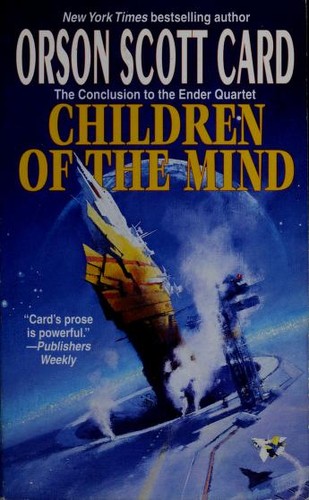
Children of the Mind
Orson Scott Card
Summary (Spoiler-Free)
In 'Children of the Mind,' the fourth installment of the Ender's Game series, Orson Scott Card explores the profound themes of identity, consciousness, and the essence of humanity. The narrative revolves around the characters of Ender Wiggin and his companions as they grapple with the implications of artificial intelligence and the complexities of their own existence. Set against a backdrop of interstellar conflict and philosophical inquiry, the story invites readers to ponder the intricate connections between love, sacrifice, and the future of humanity.
Who Should Read This
If you find yourself captivated by intricate narratives that delve into the depths of human emotion and ethical dilemmas, you will likely enjoy 'Children of the Mind.' This book offers a thought-provoking blend of science fiction and philosophical exploration that resonates with readers who appreciate layered storytelling.
Frequently Asked Questions
Is 'Children of the Mind' part of a series, and how does it fit within the Ender's Game universe?+
Although 'Children of the Mind' is the fourth book in the Ender's Game series, it functions as a standalone narrative that can be appreciated independently. However, familiarity with the earlier books, particularly 'Ender's Game,' 'Speaker for the Dead,' and 'Xenocide,' enhances the reading experience, as it builds on established characters and themes. Readers who have followed Ender Wiggin's journey will find continuity in the philosophical questions and moral dilemmas presented here, while newcomers may still grasp the core ideas and enjoy the story's rich exploration of consciousness.
What is the target audience for 'Children of the Mind,' and are there any content considerations?+
'Children of the Mind' primarily targets young adult to adult readers who are interested in science fiction that goes beyond mere adventure. The book tackles complex themes such as identity, morality, and the nature of existence, making it suitable for those who appreciate thought-provoking literature. While there are no explicit scenes of violence or graphic content, the philosophical discussions and emotional depth may resonate more with mature audiences. Readers sensitive to existential themes should be aware that the narrative can prompt introspection and contemplation.
Are there any adaptations available for 'Children of the Mind'?+
'Children of the Mind' has not been adapted into a film or television series as of now. However, the Ender's Game universe has seen adaptations, notably the film version of 'Ender's Game,' which focused on the first book in the series. Fans of the narrative may be interested in exploring the audiobook format, which captures the book's intricate prose and character dynamics. This format can provide an immersive experience, allowing listeners to engage with the themes and dialogues in a unique way.
What distinguishes 'Children of the Mind' within the science fiction genre?+
'Children of the Mind' stands out in the science fiction genre due to its deep philosophical inquiries and character-driven narrative. Unlike many sci-fi works that prioritize action or futuristic technology, Card focuses on the emotional and ethical implications of artificial intelligence and the complexities of human relationships. This book invites readers to consider profound questions about consciousness and the essence of being, elevating it beyond standard genre conventions. The blend of speculative elements with rich character development makes it a unique contribution to the field.
What type of reader is likely to enjoy 'Children of the Mind'?+
'Children of the Mind' is likely to resonate with readers who appreciate intricate storytelling and philosophical exploration. Those who enjoy delving into the ethical implications of technology and the nuances of character relationships will find much to ponder in this book. Additionally, fans of science fiction that emphasizes emotional depth and moral complexity, rather than just action and adventure, will be drawn to Card's reflective style. If you enjoy narratives that challenge your thinking while providing rich character development, this book will likely appeal to you.
Similar Books You'll Love

0.0(0 ratings)
Rate this book:
Book at a Glance
~7 hr 6 min to read
- Pages
- 400
- First published
- 1996
- Original language
- EN