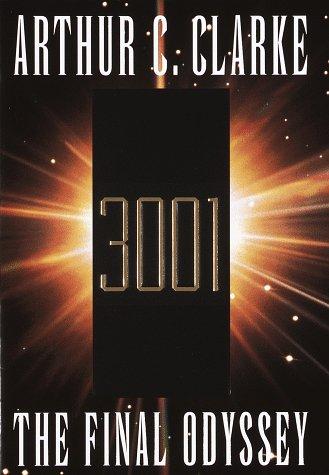
3001
Arthur C. Clarke
Summary (Spoiler-Free)
In '3001', the final installment of Arthur C. Clarke's epic vision of the future, humanity has reached an advanced stage of technological and cultural evolution. The story revolves around the fate of Frank Poole, who is resurrected a millennium after his death to navigate a vastly transformed Earth and beyond. Rich with Clarke's signature exploration of intelligence and existence, the narrative delves into the mysteries of the universe, the nature of consciousness, and the potential paths of human evolution in a universe filled with wonders and dangers.
Who Should Read This
If you're fascinated by the intersections of technology, philosophy, and the future of humanity, '3001' offers a thought-provoking journey that will resonate with your curiosity. This book is perfect for readers who enjoy immersive world-building and profound questions about existence.
Frequently Asked Questions
Is '3001' part of a series, and do I need to read previous books to understand it?+
'3001' is a standalone novel, meaning you do not need to read any previous books to enjoy this story. While it is set in the same universe as Clarke's earlier works, it introduces new themes and characters that allow readers to jump straight into the narrative without feeling lost. This accessibility makes it a great entry point for new readers, as well as a satisfying conclusion for those familiar with Clarke's earlier explorations of space and humanity.
What age group is '3001' suitable for, and are there any content notes I should be aware of?+
'3001' is generally suitable for older teens and adults, particularly those with an interest in science fiction and philosophical themes. The book explores complex ideas about humanity, intelligence, and technology, which may be challenging for younger readers. While the narrative is not excessively graphic, it does engage with mature concepts, including existential questions and the implications of advanced technology on society. Readers should be prepared for a thoughtful exploration of its themes rather than action-driven content.
Is there an audiobook version of '3001' available, and what other formats can I find it in?+
Yes, '3001' is available in multiple formats, including hardcover, paperback, and ebook versions. Additionally, there is an audiobook edition that captures the essence of Clarke's writing, making it accessible for those who prefer auditory storytelling. The audiobook is narrated with clarity, allowing listeners to immerse themselves in the intricate world and profound ideas presented in the novel. This variety of formats ensures that readers can choose the method that best suits their preferences.
What sets '3001' apart from other science fiction novels?+
'3001' distinguishes itself through its deep philosophical inquiry and visionary perspective on the future of humanity. Clarke's ability to weave scientific concepts with imaginative storytelling creates a unique blend that challenges readers to think critically about the evolution of intelligence and technology. Unlike many contemporary science fiction works that focus primarily on action or dystopian themes, '3001' invites readers to ponder larger existential questions and the potential for human advancement in a richly detailed universe. This thought-provoking approach makes it a standout in the genre.
What kind of reader tends to enjoy '3001' the most?+
Readers who are drawn to speculative fiction and enjoy exploring complex themes will likely find '3001' particularly appealing. Fans of philosophical discussions about technology, consciousness, and the future of humanity will appreciate Clarke's in-depth analysis and rich world-building. This book often resonates with those who seek not just entertainment, but also a deeper understanding of the implications of scientific progress and the human condition, making it ideal for thoughtful readers who enjoy pondering the 'what ifs' of our existence.
Similar Books You'll Love

0.0(0 ratings)
Rate this book:
Book at a Glance
~5 hr 4 min to read
- Pages
- 286
- First published
- 1997
- Original language
- EN